
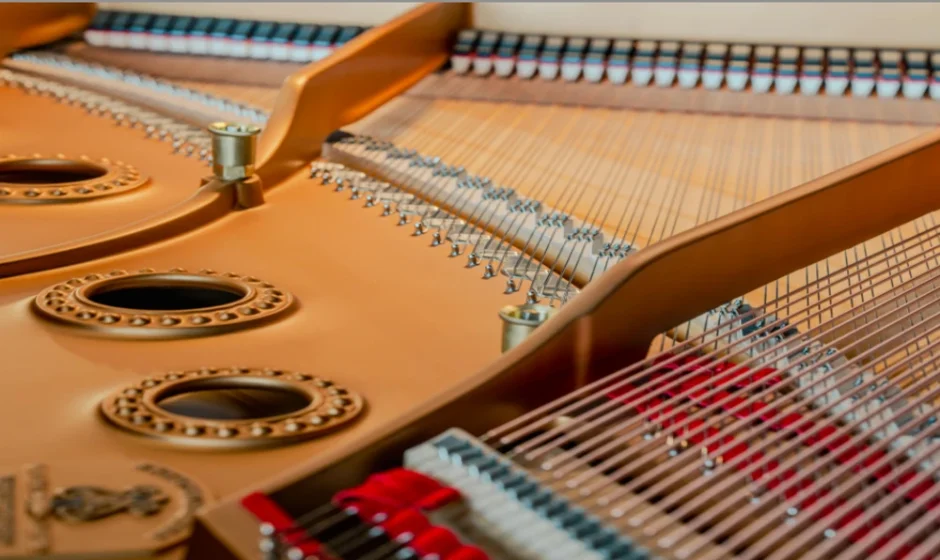

Owning an acoustic piano is a deeply rewarding experience, but it also comes with a unique set of responsibilities. Unlike digital keyboards that remain perfectly pitched forever, an acoustic piano is a living, breathing mechanical wonder. Inside its heavy wooden casing are thousands of moving parts, a massive cast-iron plate, and over two hundred steel strings stretched under immense tension.
Over time, this complex system inevitably shifts, causing the instrument to slip out of tune. But how often do you really need to call in a technician? If you ask five different pianists, you might get five different answers ranging from “once a month” to “only when it sounds bad.” To cut through the confusion, we have compiled the four golden rules of piano tuning frequency to help you maintain your instrument’s health, value, and beautiful sound.
Rule 1: The Twice-a-Year Baseline for Standard Home Pianos
For an established piano sitting in a standard residential home, the absolute baseline rule is to have it tuned twice a year.
The primary culprit behind a piano going out of tune isn’t actually how hard you play the keys; it is the change in atmospheric humidity. A piano’s soundboard is made of wood, which acts like a sponge. During the humid summer months, the soundboard absorbs moisture, expands, and pushes upward against the strings, causing the pitch to go sharp. In the dry winter months, the wood shrinks, the tension drops, and the pitch goes flat.
Tuning your piano twice a year-ideally in the spring after the heating is turned off, and in the autumn after the air conditioning is shut down-allows the instrument to adapt to these seasonal shifts and prevents severe pitch fluctuations.
Rule 2: The First-Year Exception for New or Restrung Pianos
If you have just purchased a brand-new piano, or if you have recently had an older piano completely restrung, the standard twice-a-year rule does not apply. For the first twelve months, you should expect to tune your piano three to four times.
New steel strings possess a high amount of elasticity. When they are first stretched across the plate, they carry a combined tension of roughly 18 to 20 tons. Naturally, these fresh strings will continuously stretch and slacken as they attempt to find equilibrium. Simultaneously, the new wooden components of the piano are settling under this massive structural weight. Frequent tunings during the first year “train” the strings to hold their proper tension, securing the structural integrity of the instrument for years to come.
Rule 3: Let Your Indoor Climate Dictate the Schedule
The stability of the environment surrounding your instrument plays a massive role in how well it holds its pitch. Therefore, your third golden rule is to match your tuning schedule to your indoor climate control.
If your piano is placed in an area subject to extreme temperature and humidity swings-such as near a frequently used exterior door, a drafty window, a fireplace, or directly under an HVAC vent-it will drop out of tune much faster. Homeowners who lack central climate control may find they need to tune their piano three or four times a year just to keep up with the weather. Conversely, if your piano is placed on an interior wall away from drafts, and you utilize a specialized piano humidity control system (like a damp-chaser), your piano will remain remarkably stable, allowing you to easily stick to the bi-annual rule.
Rule 4: Scale Frequency to Match Your Performance Mileage
The final rule depends entirely on usage. Just like a car requires more frequent oil changes the more miles you drive it, a piano requires more frequent tuning the more it is played.
- Casual Hobbyists: If the piano is played for a few hours a week by a casual player or a young beginner, a standard schedule of two tunings a year is perfectly sufficient.
- Heavy Practice & Teachers: If the instrument is subjected to heavy daily practice by an advanced student, or if a piano teacher uses it for hours on end with back-to-back students, the physical impact of the hammers striking the strings will cause the pitch to drift. These instruments generally require tuning every three to four months.
- Concert Halls & Recording Studios: In professional settings where the absolute highest level of auditory perfection is required, pianos are tuned before every single performance or recording session.
A common mistake many owners make is waiting until the piano sounds visibly sour before booking an appointment. However, neglecting routine maintenance causes the overall pitch of the instrument to drop significantly below standard concert pitch ($A=440text{ Hz}$). When this happens, a simple tuning is no longer enough; the technician will have to perform a time-consuming and expensive “pitch raise” to safely pull the strings back up to their proper tension.
Regular maintenance protects your investment, preserves the moving parts, and ensures that every time you sit down to play, you are greeted with a beautiful, resonant harmony. If it has been more than six months since your last professional check-up, taking a moment to find a qualified piano tuning service near me is the single best step you can take to keep your musical journey on track.